

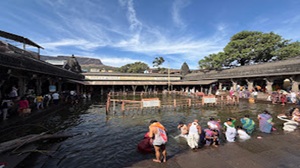
Kushavart Kund is one of the holiest pilgrimage sites in Trimbakeshwar, Nashik, Maharashtra. Located just a short walk from the famous Trimbakeshwar Jyotirlinga Temple, this sacred water tank is regarded as the symbolic origin of the holy Godavari River, often called the Dakshin Ganga (Ganga of South India).
Every year, lakhs of devotees visit Kushavart Kund to take a holy dip before offering prayers at the Trimbakeshwar Temple. According to Hindu beliefs, bathing in the sacred waters of Kushavart Kund helps devotees purify themselves, wash away sins, and prepare spiritually for Lord Shiva’s darshan.
Whether you are visiting Trimbakeshwar for a pilgrimage, the Kumbh Mela, or simply exploring Maharashtra’s rich spiritual heritage, Kushavart Kund is a place that should not be missed.
History of Kushavart Kund
The history of Kushavart Kund is deeply connected with Maharishi Gautam, one of the most respected sages mentioned in Hindu scriptures.
Ancient legends describe that Gautam Rishi lived in the Brahmagiri Hills area with his wife, Ahalya. Their ashram was known for its peaceful atmosphere, spiritual practices, and charitable nature. Due to a misunderstanding involving a sacred cow, Gautam Rishi sought forgiveness and performed intense penance to please Lord Shiva.
Pleased with his devotion, Lord Shiva requested Goddess Ganga to descend to earth. The sacred river appeared on Brahmagiri Mountain and later became known as the Godavari River. To ensure the holy water remained accessible to devotees throughout the year, a sacred tank was created, which is now known as Kushavart Kund.
This legend makes Kushavart Kund one of the most spiritually significant places in Trimbakeshwar.
Religious Importance
Kushavart Kund is not just a water reservoir—it is considered one of the holiest places associated with Lord Shiva.
Many devotees believe that:
- Bathing here removes negative karma.
- It purifies both body and mind.
- It prepares pilgrims for Mahakaleshwar darshan.
- It is highly auspicious before performing religious rituals.
- Ancestor rituals (Shraddha and Tarpan) become more meaningful when performed here.
Because of these beliefs, pilgrims often begin their spiritual journey at Kushavart Kund before visiting the Trimbakeshwar Temple.
Architecture of Kushavart Kund
The Kund is beautifully designed using traditional black stone architecture that reflects the heritage of Maharashtra.
Its notable features include:
- Stone steps descending into the sacred water
- Ancient carved walls
- Traditional temple-style architecture
- Decorative sculptures
- Small shrines surrounding the Kund
- Peaceful spiritual atmosphere
The structure has undergone restoration over time while preserving its historical appearance.
Connection with the Godavari River
The Godavari River is India’s second-longest river and holds immense religious importance.
Although the river originates from the Brahmagiri Hills, Kushavart Kund is traditionally regarded as the ceremonial and spiritual source from which pilgrims receive the blessings of the sacred river.
Because of this association, devotees treat the water of Kushavart Kund with great reverence.
Kushavart Kund During Kumbh Mela
One of the biggest events associated with Kushavart Kund is the Kumbh Mela, held in Nashik and Trimbakeshwar every twelve years.
During this grand religious gathering:
- Lakhs of devotees visit the Kund.
- Saints and Akharas perform holy processions.
- Sacred bathing rituals are conducted.
- Religious discourses and cultural programs take place.
- The spiritual atmosphere becomes extraordinary.
The Kund becomes the center of devotional activities during this period.
Rituals Performed at Kushavart Kund
Many religious ceremonies are conducted here throughout the year, including:
- Holy bath (Snan)
- Pind Daan
- Tarpan
- Narayan Nagbali-related rituals
- Rudrabhishek preparations
- Pitru rituals
- Prayer offerings
Devotees often consult local priests for guidance before performing these ceremonies.
Best Time to Visit
Kushavart Kund can be visited throughout the year, but some seasons offer a more pleasant experience.
October to February
The weather is cool and comfortable, making it ideal for sightseeing and temple visits.
Monsoon (June to September)
The surrounding Brahmagiri Hills become lush green, creating a beautiful natural setting. Visitors should be cautious, as rain may make the stone pathways slippery.
Shravan Month
This sacred month dedicated to Lord Shiva attracts thousands of devotees every Monday. Expect large crowds and longer waiting times.
Mahashivratri
The festival draws devotees from across India, making Kushavart Kund and Trimbakeshwar Temple especially vibrant.
How to Reach Kushavart Kund
By Air
The nearest airport is Nashik Airport, while Mumbai International Airport offers wider domestic and international connectivity.
By Train
Nashik Road Railway Station is the nearest major railway station. From there, taxis and buses are available to Trimbakeshwar.
By Road
Trimbakeshwar is well connected by road with Nashik, Mumbai, Pune, Aurangabad, and other cities in Maharashtra.
Regular state transport buses and private taxis operate throughout the day.
Distance from Trimbakeshwar Temple
One of the biggest advantages of visiting Kushavart Kund is its close proximity to the Trimbakeshwar Jyotirlinga Temple.
Most pilgrims comfortably walk between the Kund and the temple within a few minutes, making it easy to complete both visits during the same pilgrimage.
Nearby Attractions
Your visit to Kushavart Kund can be combined with several nearby attractions:
Trimbakeshwar Jyotirlinga Temple
One of the twelve Jyotirlingas of Lord Shiva and the main pilgrimage destination.
Brahmagiri Hills
Believed to be the origin of the Godavari River, offering scenic trekking routes and spiritual significance.
Gangadwar
A sacred location associated with the emergence of the Godavari River.
Neel Parvat
Known for its peaceful surroundings and panoramic views.
Anjaneri Hills
Believed to be the birthplace of Lord Hanuman and popular among trekkers.
Visitor Tips
To make your visit comfortable:
- Wear modest and respectful clothing.
- Carry drinking water during summer.
- Visit early in the morning for a peaceful experience.
- Remove footwear where required.
- Follow instructions given by temple authorities.
- Avoid littering and help maintain the cleanliness of the sacred site.
- Respect local customs and traditions.
- Keep personal belongings secure during crowded festivals.
Why Every Pilgrim Should Visit Kushavart Kund
Kushavart Kund is more than a historic water tank—it is a place where faith, mythology, and tradition come together. Its association with Maharishi Gautam, the sacred Godavari River, and Lord Shiva makes it one of the most revered spiritual destinations in Maharashtra.
For many devotees, taking a holy dip at Kushavart Kund before visiting Trimbakeshwar Temple completes the pilgrimage in a meaningful way. The peaceful atmosphere, historical significance, and centuries-old traditions continue to attract pilgrims from across India and around the world.
Frequently Asked Questions (FAQs)
Where is Kushavart Kund located?
Kushavart Kund is located in Trimbakeshwar, Nashik district, Maharashtra, close to the Trimbakeshwar Jyotirlinga Temple.
Why is Kushavart Kund famous?
It is considered the sacred origin point associated with the Godavari River and is an important pilgrimage site for Lord Shiva devotees.
Can visitors take a holy bath?
Yes. Many devotees take a ritual bath here before visiting Trimbakeshwar Temple, following local guidelines and temple regulations.
Which river is associated with Kushavart Kund?
Kushavart Kund is closely associated with the holy Godavari River, also known as the Dakshin Ganga.
What is the best time to visit?
October to February offers pleasant weather, while Shravan month and Mahashivratri are spiritually significant but much more crowded.
Conclusion
Kushavart Kund stands as one of the most sacred landmarks in Trimbakeshwar, combining spiritual heritage, ancient history, and religious devotion. Whether you come for a holy dip, temple darshan, or to explore the rich traditions of Maharashtra, a visit to Kushavart Kund offers a deeply meaningful experience. Its timeless importance continues to inspire pilgrims seeking blessings, peace, and a stronger connection with India’s spiritual legacy.
